Sri Lanka: MONLAR Urges International Support over Hambantota Green Energy Expansion Violating Peasants and Environmental Rights
This Appeal for International Solidarity was originally posted by La Via Campesina on 3 April 2026. Available here.
The Sri Lankan government’s move to establish solar power plants in Hambantota has triggered a major backlash from peasant unions and environmental groups. More than 1,000 acres of forest ( a critical elephant habitat and biodiversity zone) have been cleared to make way for the so-called green energy initiative led by 17 solar companies. Over 5,000 farming families in areas such as Mayurapura and Gonnooruwa now face a surge in human–elephant conflict, threatening their safety, crops, and food security.
We are reproducing an appeal from MONLAR asking its allies in the international community to write to the President of Sri Lanka denouncing the move and calling for an immediate halt to the ongoing clearing operations.
To the members of the International Civil Society and Activists Community,
We are writing to you as the Movement for Land and Agriculture Reform to bring to your immediate attention a critical human rights and environmental crisis unfolding in the Hambantota district of Sri Lanka, one that is being deliberately disguised as a “green” energy initiative.
The farming communities of Hambantota are no strangers to struggle. They spent months protesting and advocating to secure the gazettement of the elephant corridor, a landmark legal protection for the ancient movement routes of endangered Asian elephants and the livelihoods of the communities who share that land. It is in the wake of that very victory that 17 solar companies have now moved in, clearing the land those communities fought to protect. Their struggle is being erased.
This is not the first time Hambantota’s people have faced dispossession.
The region has already borne the weight of the Belt and Road Initiative, including the controversial Hambantota Port lease and aggressive urbanisation that communities strongly opposed, bringing forced displacement and development imposed without transparency or consent. The current solar expansion follows the same pattern: irregular development proceeding in defiance of law and community rights, with both people and animals bearing the consequences.
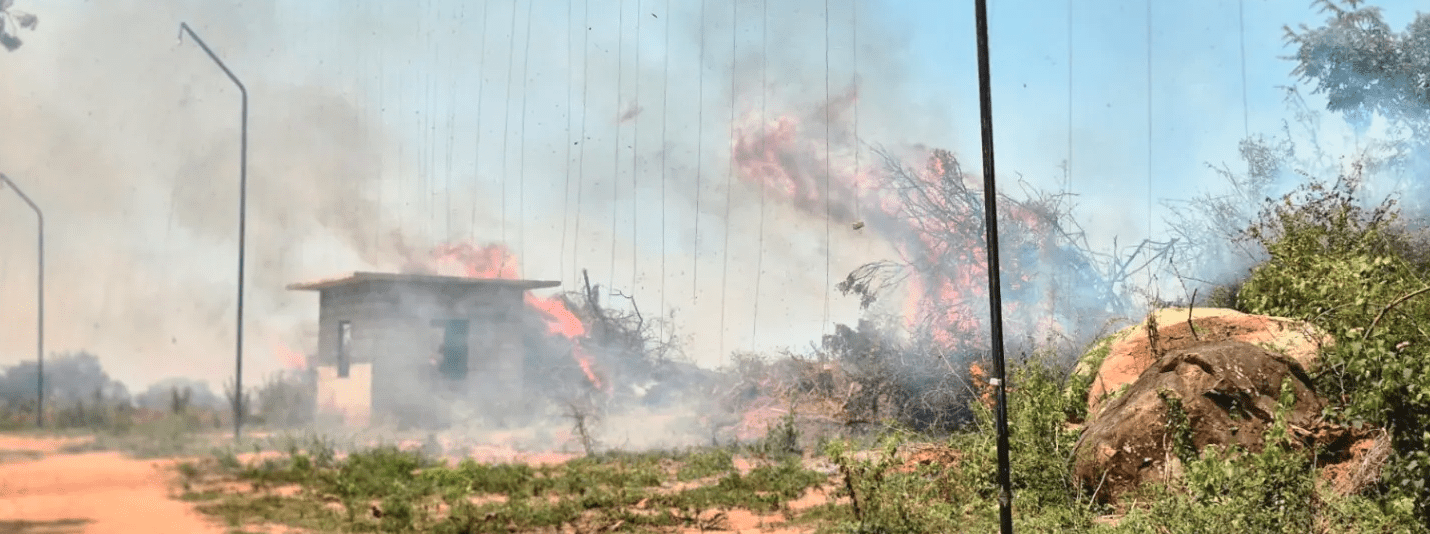
While presented as renewable energy, a massive solar expansion is ravaging over 1,000 acres of forest within the Hambantota Managed Elephant Reserve (MER), using heavy machinery and deliberate fire to clear critical wildlife corridors, effectively “green-grabbing” land that sustains both endangered elephants and local farming communities.
The Impact
- Human Elephant conflict: By blocking ancient movement corridors (such as Sanakku Gala and Kapapu Wewa) with electric fences, the project is driving elephants into villages.
- Livelihood Crisis: More than 5,000 farming families in areas like Mayurapura and Gonnooruwa are now facing a surge in Human-Elephant Conflict, threatening their safety, crops, and food security.
- Governance Failures: Reports indicate these projects have bypassed mandatory Environmental Impact Assessments (EIAs) and ignored the protests of local communities and conservationists.
- Counter-Productive Climate Action: As noted by local experts, clearing and burning dry-zone forests releases stored carbon and disrupts local rainfall patterns, undermining the very emissions-reduction goals the solar project claims to serve.
A Just Transition must be inclusive, transparent, and ecologically sound. If renewable energy is built on the ruins of biodiversity and the displacement of the rural poor, it replicates the same extractive logic of the fossil fuel era that it hopes to eliminate.
APPEAL FOR INTERNATIONAL SOLIDARITY
We are asking your organization to show solidarity with the affected communities of Hambantota by sending a formal letter to the President of Sri Lanka. Your international standing can provide the necessary pressure to:
- An immediate halt to all clearing within the Managed Elephant Reserve.
- Strict adherence to the law, ensuring comprehensive EIAs and Archaeological Impact Assessments are conducted and made public.
- Prioritizing Rooftop Solar and Degraded Lands (such as abandoned mines) rather than primary forests and productive agricultural land, as recommended by local environmental advocates.
We would be honoured to have your voice join ours in demanding a transition that is truly just for both people and the planet.
In solidarity, MONLAR TEAM.