Call for Inputs: Report of the UNDROP Working Group on the Right to Seeds
Editor’s note:
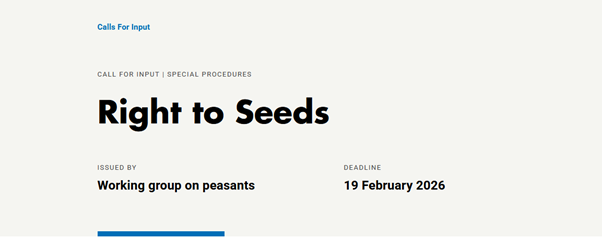
The United Nations Working Group on UNDROP has opened a call for inputs inviting civil society, states, and multilateral institutions to directly contribute to its next report on the Right to Seeds, which will be presented to the UN Human Rights Council in October 2026.
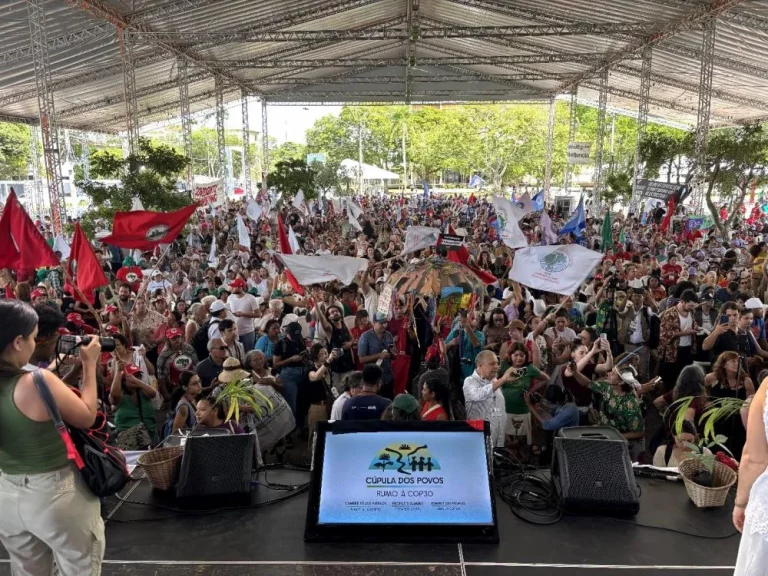
This is a key opportunity for rural movements and organisations to share their lived realities, experiences, and struggles related to seeds, including access to, control over, use, conservation, exchange, and development of seeds. Beyond serving as a concrete means of officially documenting the cross-cutting challenges faced by peasants and other people working in rural areas in relation to their right to seeds, this call for inputs enables rights holders to have their voices reflected in an official UN publication, which can later be used for advocacy and awareness-raising vis-à-vis states and relevant institutions.
We encourage the various movements and organisations representing UNDROP’s rights holders to submit their contribution (maximum 1000 words) to this call by 19 February 2026. For more information, please read the full call below.
Background
Seeds are foundational to food systems, biodiversity, culture and rural livelihoods. They constitute the starting point of food production and are central to the ways in which peasants and Indigenous Peoples have developed, preserved and transmitted agricultural knowledge adapted to diverse ecological conditions across generations.
Seeds play a critical role in maintaining agricultural biodiversity, as they embody the genetic diversity necessary to enhance resilience to pests, diseases, environmental degradation and climate variability. Beyond their biological function, seeds are also closely linked to cultural heritage, social relations and, in some contexts, spiritual and ceremonial practices.
For peasants and other people working in rural areas globally, including Indigenous Peoples, pastoralists, fishers and forest peoples, seeds are inseparable from livelihoods and autonomy. The ability to cultivate, harvest, save, exchange and improve seeds underpins food security, income generation, self-determination and the sustainability of rural communities. Peasant seed systems have historically sustained a wide diversity of crops and plant varieties adapted to local ecosystems and climatic conditions, contributing to food sovereignty, nutrition and resilience.
The United Nations Declaration on the Rights of Peasants and Other People Working in Rural Areas (UNDROP) explicitly recognizes the right to seeds (article 19), including the right of peasants to save, use, exchange and sell farm-saved seeds and propagating material. The realization of this right is closely interconnected with other rights recognized in UNDROP, including the right to food and food sovereignty (article 15), the rights to land and other natural resources (article 17), rights related to biodiversity (article 20), the right to a safe, clean, healthy and sustainable environment (article 24), and the right to participation in decision-making processes affecting peasants’ lives (article 10). In the same manner, the United Nations Declaration on the Rights of Indigenous Peoples (UNDRIP) recognizes Indigenous Peoples’ rights to maintain, control, protect and develop their traditional knowledge, innovations and cultural heritage, including genetic resources and seeds (article 31), in connection with their rights to lands, territories and resources, self-determination and development.
International environmental and agricultural frameworks reinforce the protection of peasant seed systems. The Convention on Biological Diversity (CBD) affirms the importance of conserving biological diversity, sustainable use of its components, and equitable benefit-sharing from genetic resources, while recognizing the traditional knowledge and practices of Indigenous Peoples and local communities. The International Treaty on Plant Genetic Resources for Food and Agriculture (ITPGRFA) recognizes farmers’ vital role in conserving and improving plant genetic resources and affirms Farmers’ Rights, including protection of traditional knowledge, equitable benefit-sharing, and participation in decision-making on plant genetic resources.
Despite these normative frameworks, seed systems worldwide are increasingly shaped by legal, economic and technological developments, which in some contexts, may undermine peasant seed systems. These may include restrictive seed laws and certification regimes, intellectual property protections, trade and investment agreements, corporate concentration in the seed sector, and the digitalization of genetic resources. Such developments have raised concerns regarding the marginalization of traditional practices, erosion of seed diversity, misappropriation of traditional knowledge and persistent inequalities, including gender-based and structural discrimination.
In line with its mandate to promote and monitor the implementation of UNDROP, the Working Group on peasants is preparing a thematic report to clarify the content and scope of the right to seeds, assess challenges and good practices in its implementation, and formulate recommendations to States and other actors to ensure that seed governance frameworks are consistent with human rights, biodiversity conservation and food sovereignty.
The Working Group encourages submissions from States, international and regional organizations, national human rights institutions, civil society organizations, peasant movements, Indigenous Peoples, academics, private sector actors, and other relevant stakeholders. Submissions from right-holders and their representative organizations are particularly encouraged.
Key questions and types of input/comments sought
Seeds in Context: Significance and Practice
1. What is the social, cultural, economic and environmental significance of seeds in your local, national or regional context, including their contribution to food security, livelihoods and environmental sustainability?
2. What practices exist in your country and/or community for cultivating, harvesting, saving, exchanging, sharing and improving seeds?
3. How are roles and responsibilities related to seeds distributed within communities or societies, including among women, men, youth, Indigenous Peoples and other groups?
National and International Frameworks
4. What national laws, regulations or policies govern the saving, use, exchange and sale of peasant seeds, including measures for their protection? How effective are these frameworks in recognizing and upholding the right to seeds and in supporting the conservation of native and traditional seeds?
5. How do national legal and policy frameworks address the interests of peasants and rural communities in relation to those of commercial seed actors?
6. How have international instruments related to peasants’ rights, seeds and biodiversity, including UNDROP, UNDRIP, the CBD and the ITPGRFA, been reflected in national laws and policies, and what concrete impacts or benefits have they had for peasant and rural communities?
Challenges, Responses and Good Practices
7. What are the main challenges or threats faced in exercising the right to seeds, and how have communities, organizations or authorities responded to them?
8. What national, regional or international mechanisms have been used to promote or defend the right to seeds, and what has been their effectiveness?
9. What gaps remain in the protection and support of the right to seeds? Please share examples of laws, policies, practices or community-led initiatives that could be strengthened, replicated or scaled up.
Next Steps
Input/comments may be sent by e-mail. They must be received by 19 February 2026 .
Inputs should include the contributor’s name, organization (if applicable) and contact details for follow-up.
Additional supporting materials, such as reports, academic studies or background documents, may be included as annexes or provided through web links.
Unless otherwise specified by those making a submission, submissions will be made public on the Working Group’s website.
Email address: [email protected]
Email subject line: Input for HRC Report on Seeds
Word/Page limit:
1000 wordsAccepted file formats:
Word, PDFAccepted Languages:
English, French, Spanish