Video Interview with the Authors of the Landmark Book “Peasant Rebellion: Agrarian Reform and Agroecology in Brazil”
In this exclusive interview for Defending Peasants’ Rights, the authors of Peasant Rebellion: Agrarian Reform and Agroecology in Brazil discuss the origins, findings and enduring relevance of a research project conducted in 2003–2004 and recently published as a book in Brazil.
The conversation brings together four contributors: Mônica Dias Martins, a retired professor at the State University of Ceará and longtime social movement activist; Silvana Lúcia da Silva Lima, a professor at the Federal University of Recôncavo da Bahia, a member of the Landless Workers’ Movement (MST), and an activist in the fields of rural education and agroecology; Aparecido Luiz de Souza, a member of the Pastoral Land Commission (CPT) who has worked for decades alongside quilombola and riverside communities in the Amazon; and Justina Inês Cima, a peasant leader and member of the Peasant Women’s Movement (MMC) since its foundation in 1983, also active in La Via Campesina.
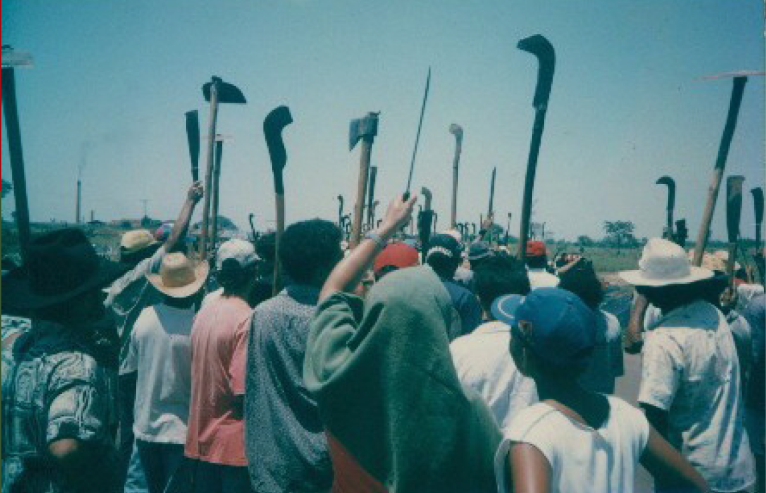
The book documents four experiences of peasant resistance and collective organization across different regions of Brazil, highlighting the transformative potential of popular agrarian reform and agroecology. Developed in response to market-based agrarian reform policies promoted by the World Bank and other international institutions, the research set out to demonstrate the concrete achievements of peasant communities, land reform settlements and quilombola territories.
Among the key highlights of the interview are:
A groundbreaking research methodology:
The authors explain how they developed
a collective, participatory and militant research approach, placing peasants and rural communities at the centre of knowledge production rather than treating them as research subjects.
The power of collective organisation:
They share experiences from the Santana settlement in Ceará, the Conquista na Fronteira settlement in southern Brazil, and quilombola communities in Oriximiná, Pará, showing how collective land ownership, cooperatives and community-led initiatives can transform living conditions.
Agrarian reform beyond access to land:
The discussion explores how peasant struggles create broader territorial transformations through education, healthcare, food production, local economies, environmental protection and democratic participation.
Women and youth at the heart of rural struggles:
The interview addresses gender equality, women’s leadership, the challenges posed by patriarchy and the importance of strengthening young people’s political organisation in the countryside.
Above all, the interview presents the book as more than a historical record: it is a political and educational tool, a source of inspiration for contemporary struggles for agrarian reform, food sovereignty, agroecology, social justice and rural democracy.
We hope this initiative will reach the rights holders of the UNDROP around the world, as well as research centres and universities worldwide. Our aim is to share this experience as an inspiration for innovative research methodologies that bring together rural communities, grassroots organizations, social movements and academics in a collective process of knowledge production. A methodology that does not simply study rural peoples and their realities, but actively involves them in documenting their own experiences, making their struggles visible and strengthening their capacity to defend their rights and advance their collective demands.
Watch the full interview below. Subtitles can be enabled directly on YouTube and are available in English, Spanish, French and Portuguese.
Download the full book Peasant Rebellion: Agrarian Reform and Agroecology in Brazil (Portuguese only):