
Webinar – UNDROP implementation in the Europe and Central Asia region
This webinar was organized by Schola Campesina, an international agroecology school, based in Italy. It’s part of a serie of 5 webinar, you can find them here.
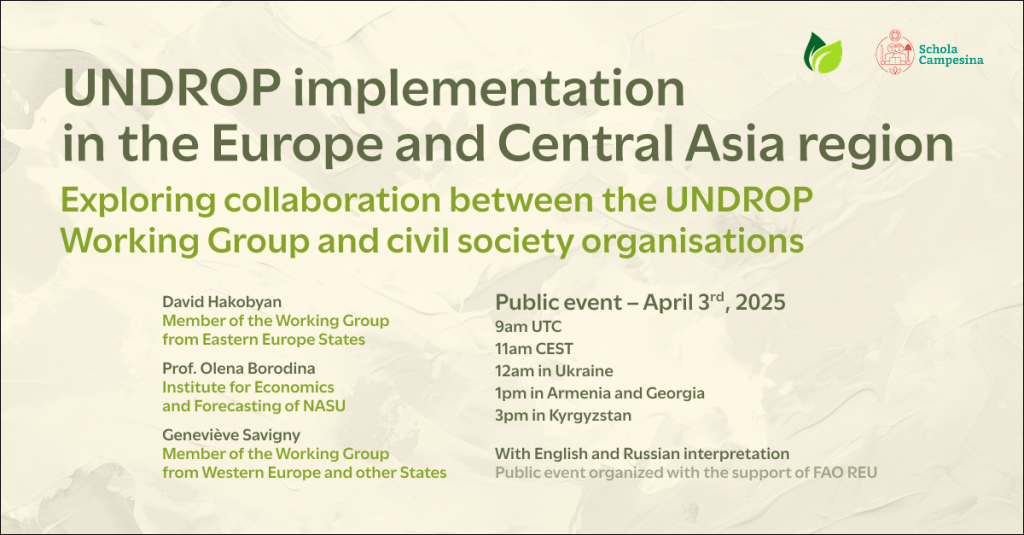

This webinar was organized by Schola Campesina, an international agroecology school, based in Italy. It’s part of a serie of 5 webinar, you can find them here.
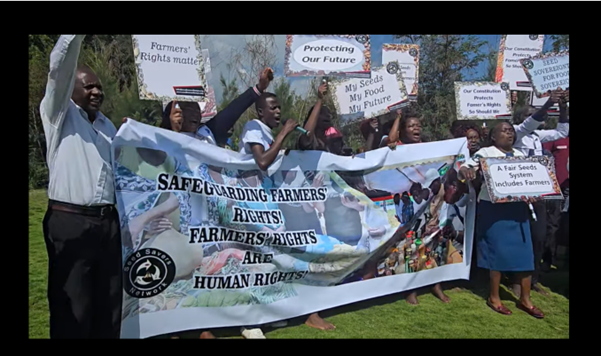
Editor’s note: A new court ruling marks a historic milestone for peasants’ rights and the right to seeds in Kenya and internationally. In an unprecedented decision, the High Court has reaffirmed that rights protected by the Constitution must be interpreted in light of international frameworks such as the United Nations Declaration on the Rights of…
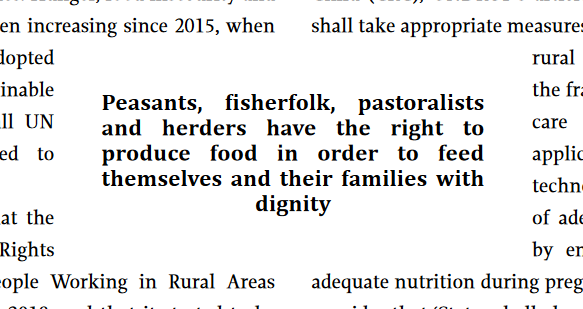
RESEARCH BRIEF This research brief was first published by the Geneva Academy, you can find it here. Peasants and other people working in rural areas, including fisherfolk, pastoralists and herders feed between 70 and 80 per cent of the world population, but they represent 80 per cent of those suffering from hunger, food insecurity and…
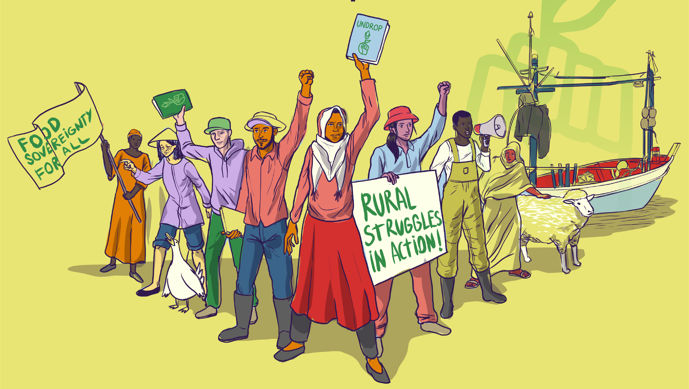
Held on 25 June 2025, this webinar showcased and brought visibility to the wide diversity of UNDROP rights holders, highlighting their struggles for sustainable and just food systems. It also shed light on their efforts and views regarding the mobilisation of the UNDROP in rural peoples’ struggle for their rights. The webinar was honoured by…

Thesis to obtain the Master in International and Development Studies of the Graduate Institute in International and Development Studies in Geneva AbstractFocusing on the Guarani Mbyá and the Landless Workers’ Movement (MST) in Santa Catarina, this thesis explores the similarities and differences between indigenous and landless food sovereignty. It shows how their narratives are intertwined…
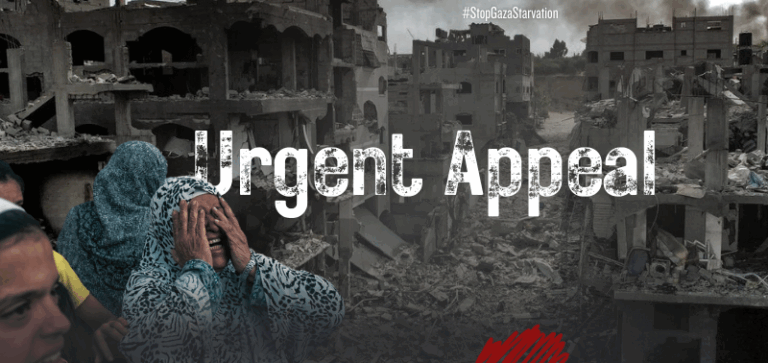
Defending Peasants Rights hereby republishes the statement issued by UAWC on 31/07/2025 Just moments ago, Israeli occupation forces launched a military assault on the Multiplication Unit of UAWC Seed Bank in the Hebron area, using bulldozers and heavy machinery to demolish storage facilities and infrastructure essential to the unit’s operations.The attack resulted in the destruction…
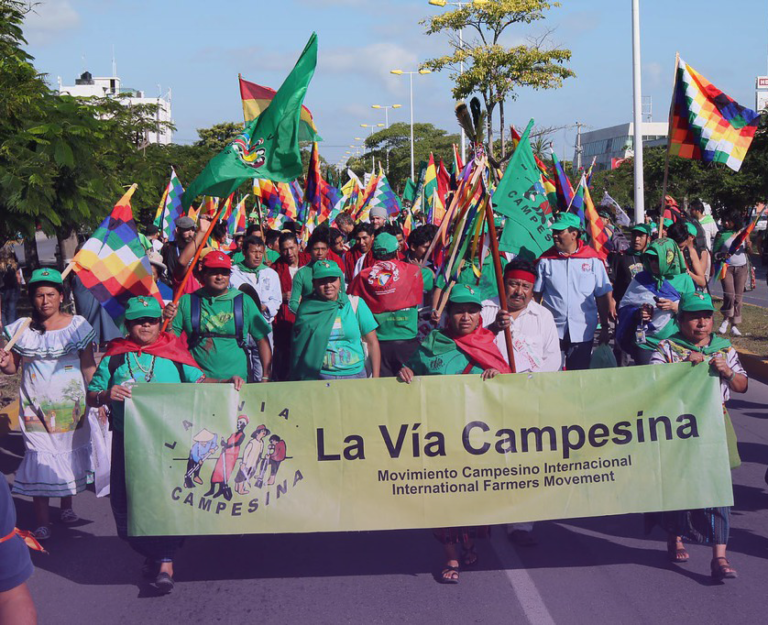
Now that the Declaration completes 4 years, read about some achievements and challenges of the peasant movement to implement it #LVC30Years #PeasantRightsNow This article was first publish on Capire’s website on December 20th, 2022. You can find it here. The Declaration of Peasant Rights was approved by the United Nations (UN) on December 17, 2018….