Defending Peasants’ Rights – Newsletter n°10
The UN Working Group on UNDROP: civil society consultation and first country visit
Engaging UNDROP’s rights holders in the next thematic report of the Working Group
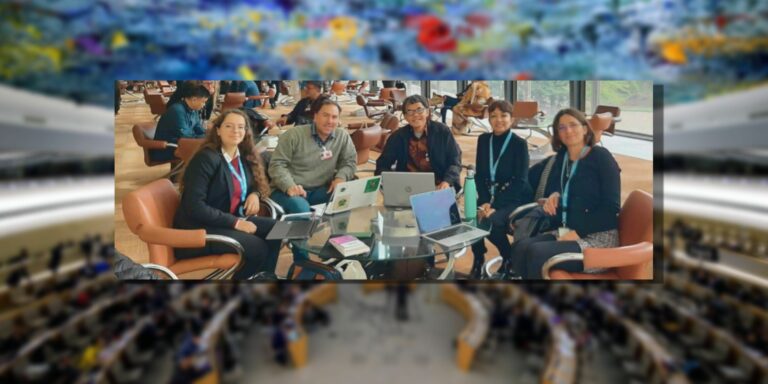
Defending Peasants’ Rights continues to collaborate closely with the experts from the UN Working Group on UNDROP. In March 2026, we organised an online dialogue with the former chair of the Working Group, Carlos Duarte, gathering UNDROP’s rights holders from all over the world to provide direct input to the Working Group’s upcoming thematic report on Rural Territories on Land and Sea.
This report, due to be presented to the UN General Assembly in New York in the second term of 2026, will examine how violations related to land, water, and forests impact the dignity, stability, and livelihoods of peasants and rural workers worldwide. Inputs from rights holders and their representative movements and organisations were key to ground the report on the lived realities and struggles of peoples working in rural and water territories, who face multiple forms violations and threats as green- and blue-grabbing practices advance in a world increasingly controlled by private capital and transnational corporations.This discussion took place following the official Call for inputs released by the WG, which gathered many contributions. See them here.
The UN Working Group on UNDROP concludes its official visit to Ghana
The Working Group conducted its first official country visit since the start of its mandate, undertaking a ten-day mission to Ghana. During the visit, the experts met with a wide range of UNDROP’s rights holders, including smallholder farmers, artisanal fishers and pastoralists, as well as public authorities and varied civil society representatives. While noting important legislative and policy advances, they highlighted ongoing challenges related to land access, poverty, exclusion, environmental degradation and limited access to finance and markets.
The Working Group stressed the need for stronger implementation of existing laws and policies to ensure that Ghana’s agricultural transformation benefits rural communities and fully reflects the rights recognised in UNDROP.
Read the end of the mission statement with preliminary findings here.
Two new subcategories have been added to the website. Check them out!
New category on UNDROP’s Rights Holders
UNDROP recognises a wide range of rural constituencies as its rights holders, which allows diverse rural groups that often face marginalisation and multiple human rights violations to use UNDROP as a legal and political tool to protect their fundamental rights at the national, regional, and international levels. This new subcategory aims not only to highlight the plurality of UNDROP’s rights holders, but also to provide guidance on the interpretation of the definition of “peasants and other people working in rural areas” contained in Article 1 of the Declaration. It includes insightful contributions from Shalmali Guttal, Chairperson of the UN Working Group on UNDROP, as well as from rights holders themselves, who participated in an online roundtable held during our 2025 public webinar.
Click here to access the new Rights Holders subcategory on Defending Peasants’ Rights
National Laws and Policies
The appropriation and mobilisation of UNDROP by rural movements and organisations have increasingly yielded important victories at the legislative and policy levels across different countries, especially in South America. This new subcategory serves to gather the main legislative and policy advancements obtained as a result of political advocacy led by rural constituencies and allies, aimed at creating or amending national legal frameworks that protect the rights of peasants, fisher peoples, nomads, and pastoralists, as well as other rights holders, in light of UNDROP’s provisions.
In recent years, we have witnessed a growing influence of UNDROP in shaping laws and policies at national level, thanks to the mobilisation of rural movements that give life to this legal instrument in their struggles. These victories not only help safeguard the rights of rural peoples, but also contribute to emerging practices that can guide future legislative and policy developments in favour of the rights of those who live and work in rural areas.
Click here to access the new National Laws and Policies subcategory on Defending Peasants’ Rights
Subscribe to our Newsletter!
Send us your proposals for publications and future collaborations!
Join us on social media to stay inspired and amplify the voices of rural struggles!