IARAA: Artificial intelligence at the service of the peasantry and food sovereignty in Brazil
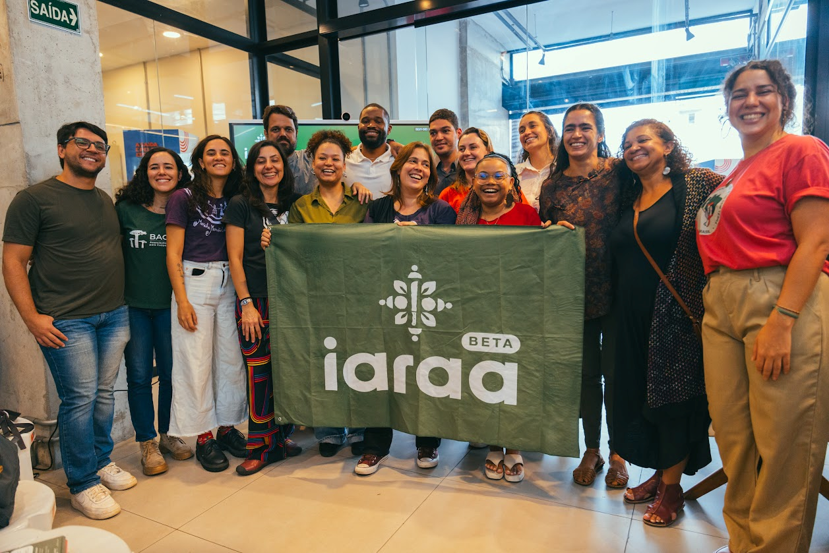
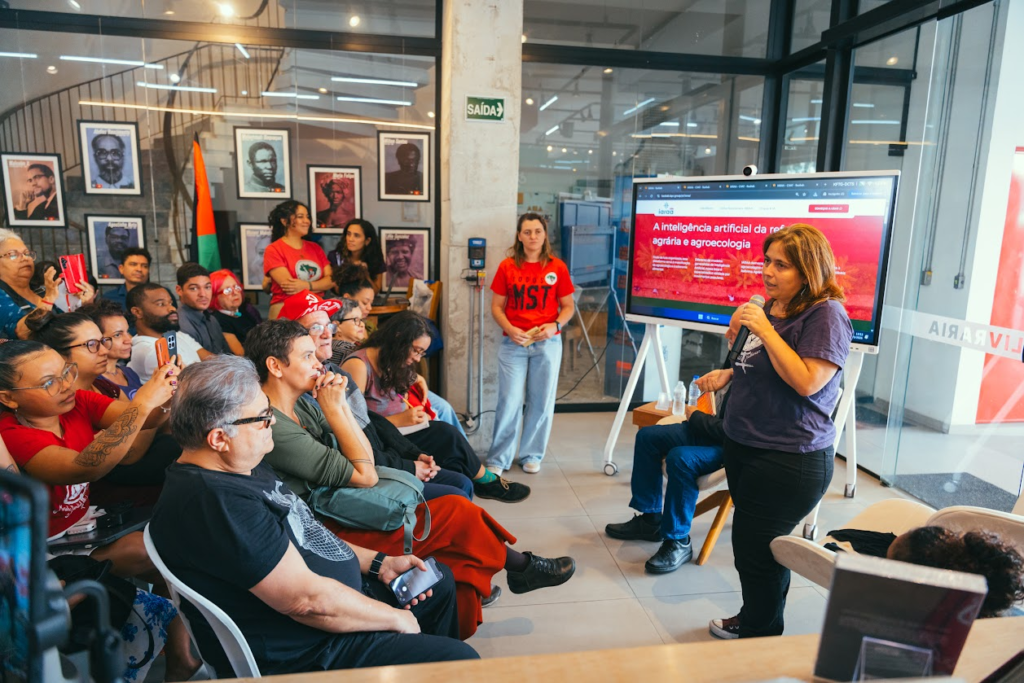
In Brazil, the World March of Women (WMW) and the Landless Rural Workers’ Movement (MST) joined forces with the International Association for Popular Cooperation (Baobab) to develop an innovative artificial intelligence project aimed at advancing agroecology and agrarian reform by strengthening popular digital sovereignty. IARAA (Artificial Intelligence for Agrarian Reform and Agroecology) was launched in May 2026 as an innovative tool created by and for social movements directly engaged in the struggle for land and the production of healthy food in the country.
Artificial intelligence, controlled by the large transnational technology corporations of the Global North, reinforces capitalist power structures and shapes global agriculture. The IARAA aims to reorient this technology to serve peoples and rural communities’ needs and thereby break the corporate technological monopoly. In this way, it helps to strengthen food sovereignty and build fairer, more democratic and sustainable agricultural systems, transforming technology into a genuine lever for emancipation and social justice for the peasantry.
To better understand this initiative and inspire rural movements in different parts of the world, the Defending Peasants’ Rights platform conducted the following interview with representatives of the movements that conceived and developed this project:
1. What is IARAA and how did the initiative come about within the World March of Women and the MST?
IARAA stands for Artificial Intelligence for Agrarian Reform and Agroecology, a tool created by grassroots movements with the aim of democratising agroecological knowledge and strengthening Popular Agrarian Reform. It emerged from the Course on Artificial Intelligence for Grassroots Movements in the Global South, which took place in Shanghai in July 2025. At that time, as well as critically and technically engaging with the technologies involved in AI, activists from movements in various countries were introduced to the Chinese model of technological development. This experience led us to reflect on building the struggle for technological sovereignty in our countries, and to create tools to wage this struggle.
The Landless Workers’ Movement of Brazil (MST) and the World March of Women (MMM) were involved in developing this course and, together with the International Association for Popular Cooperation (Baobab), decided to establish the IARAA so that it could serve as a tool for the widespread adoption of agroecology, popular feminism and our perspective on technological sovereignty in Brazil.
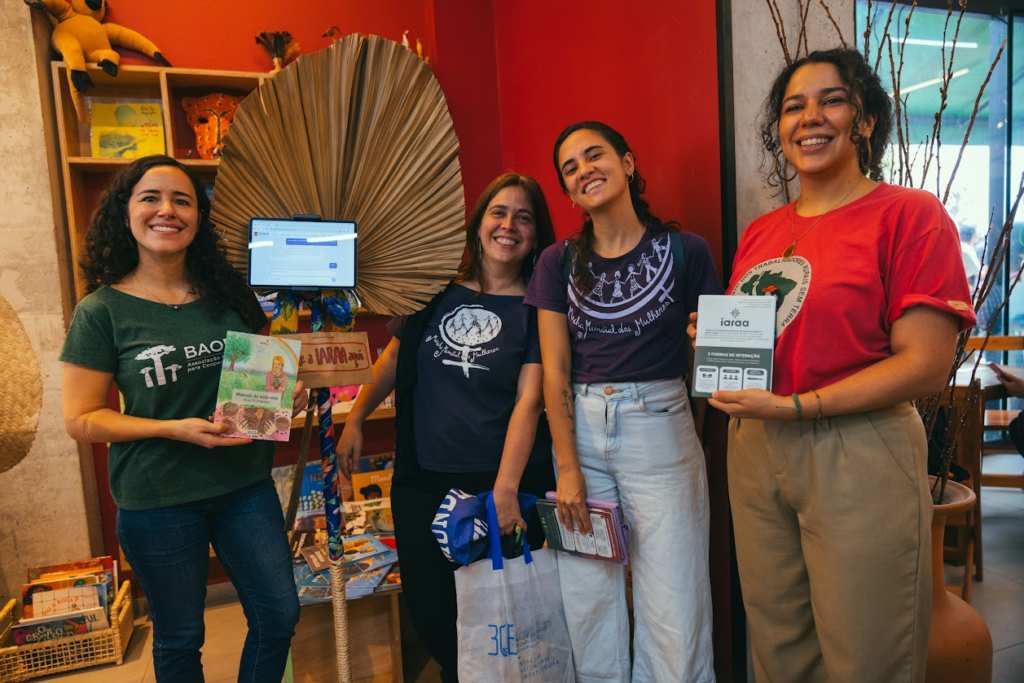
To build the knowledge base that underpins this tool, we brought together a team of agroecology experts from the MST and the World March of Women, representing all regions of Brazil. It was these comrades who defined the conceptual, political and technical foundations that guide the IARAA’s responses. At the same time, we trained activists from the movements themselves in the more technical aspects of AI development, particularly in the RAG architectures that underpin the tool. We did not want to rely on an external technical team that did not understand the political project, but rather to train activists who understood this political commitment in all its dimensions. We have had the support of internationalist allies with more experience in developing RAG tools, and this collaboration has been fundamental.
Credit: World March of Women Brazil
2. How do you define the role of IARAA within the broader strategy of the popular struggle for food sovereignty?
The IARAA is not an isolated tool. It is part of a larger strategic project. It complements the various forms of struggle that seek to overcome the agribusiness model. It is a tool that aims to strengthen agroecology in local communities, understood by the movements as a strategic perspective for political action and for tackling the environmental crisis imposed by agribusiness. Sharing the body of agroecological knowledge is one of the fundamental tasks in this battle.
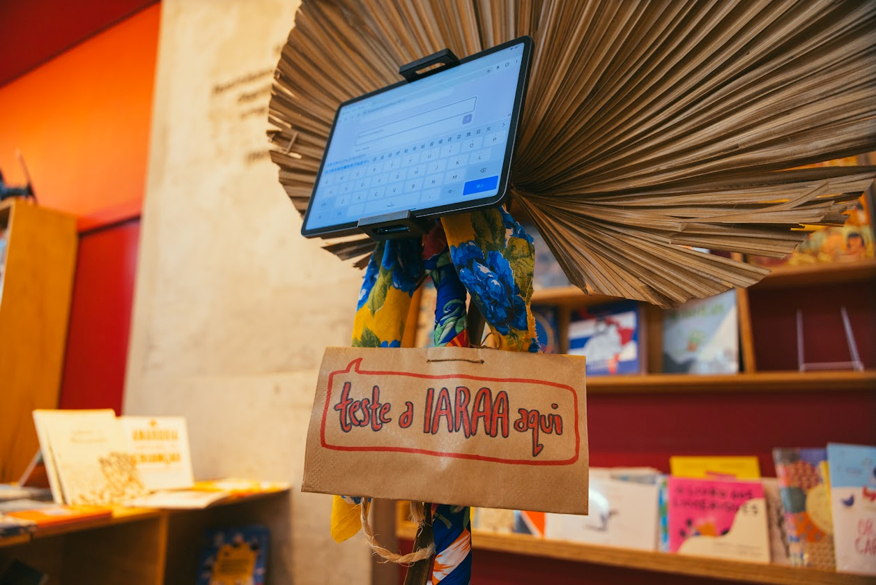
The ‘Semeadura’ profile is aimed at those working in the field who need quick, practical guidance. The ‘Mutirão’ profile goes further: it was developed to support technicians, community leaders and grassroots educators in organising participatory processes and grassroots training, serving as a tool to support not only production but also grassroots organisation within local communities. The ‘Quintal Produtivo’ profile, meanwhile, offers a distinct capacity to deal in depth with the concepts, theoretical discussions and political foundations of agroecology, serving as a reference for study, theoretical development and the training of activists, students and movement leaders.
By providing a repository of agroecological knowledge curated by the movements, IARAA helps ensure that everyone who uses it is better prepared for technical visits, collective work initiatives, rural schools and assemblies. It builds on what already exists and strengthens the struggle for what still needs to be achieved. IARAA also demonstrates, in practice, that grassroots movements are capable of creating their own technological tools. This is no small feat in a world where the development of artificial intelligence is concentrated in the hands of a few transnational corporations. However, it remains a very limited endeavour, mainly due to a lack of infrastructure. Overcoming this technological dependence requires a strategy for popular digital sovereignty, which must go hand in hand with the struggle for food sovereignty and energy sovereignty.
3. How does the IARAA incorporate a feminist perspective and help to tackle gender inequalities in access to technology and in the production of knowledge in the field?
Our perspective is not merely to guarantee women’s access to technology, but rather to position women as the subjects of technology. When women do not participate in the design, development and control of digital tools, these tools are unlikely to meet the demands of women’s lives. This has concrete consequences: most commercial AI systems are deeply gender-biased, fail to recognise women’s unpaid labour in the reproduction of life when considering ‘the economy’, and treat agriculture as if it were a neutral activity, without taking into account that women’s ways of practising agriculture are specific, diverse and, to a large extent, sustain life.
At IARAA, we address this on several fronts. Firstly, in the knowledge base: we have included a wide range of materials on popular feminism and feminist agroecology, so that the tool draws on these frameworks when generating its responses, rather than on the androcentric frameworks that dominate hegemonic knowledge production. Secondly, in the design of the tool: principles of popular feminism are embedded in the guidelines that steer IARAA, ensuring that it always takes into account the gendered division of labour, the need to build popular feminism, and the overcoming of patriarchy when formulating a response. Thirdly, regarding the team: we have a technical and political coordination team comprising many women, which represents an alternative approach to developing technology, drawing on different forms of knowledge, different questions and different priorities.
IARAA is designed to strengthen and raise the profile of women’s experiences in rural areas, recognising the invisible work they carry out and providing concrete support for the organisation of their struggle, whilst acknowledging them as key actors in agroecology.
4. How can IARAA make a concrete contribution to the implementation of the rights set out in the UNDROP, particularly the right to information (Art. 11), to the means of production (Art. 16), to agrarian reform (Art. 17) and to food sovereignty (Art. 15)?
UNDROP is a fundamental milestone because it recognises that peasant women and men have specific rights that the capitalist system systematically denies. IARAA positions itself as a tool to support the struggle for the realisation of these rights.
With regard to the right to information, what we see is that, unlike commercial chatbots which simplify responses and standardise practices, the IARAA is being programmed to take into account the diversity of biomes, production systems, social organisation and the material conditions of territories in its responses. The right to high-quality, politically informed, contextualised information presented in accessible language is central to the IARAA.
As for the means of production and food sovereignty, transnational corporations such as John Deere, BASF and Microsoft have made significant strides in Agriculture 4.0, implementing technological systems that capture data from hundreds of thousands of hectares via big tech firms. As a result, they are concentrating more and more power and gaining greater leverage to push ahead with their destructive agenda. The IARAA takes the opposite approach, putting advanced technology at the service of peasant families, boosting their productive capacity without creating technological dependence, and providing recommendations aligned with agroecology, grassroots organisation and the diversity of production systems.
On the subject of agrarian reform, we believe that IARAA is a tool to support the struggle and to advance the organisation and widespread adoption of agroecology. Popular Agrarian Reform is underpinned by the ability of peasant families to produce, remain and organise themselves on the land they have secured. A community that has access to high-quality, politically oriented agroecological knowledge produces more effectively, diversifies its production, reduces its dependence on external inputs and strengthens its autonomy. At the same time, the IARAA supports leaders and technical staff working in the settlements by organising training programmes, facilitating collective production planning and systematising experiences that can be shared across different territories. It also contributes to the political education of activists and students who need to grasp the theoretical foundations of the agrarian issue and agroecology in order to play an active role in the struggle.
Credit: World March of Women Brazil
5. What role does international cooperation, through the partnership with China, play in the project? How has this partnership been developing?
The partnership with Baobab and comrades from China was central to making IARAA a reality. Seeing the Chinese model of technological development at close quarters has provided us with much inspiration: a model in which the state directs technology to serve the people, and in which data is treated as a factor of production at the service of a collective project. We have received concrete technical support from colleagues living in a society where this debate and this development are more advanced, and who have already gained experience in developing open-source RAG tools and language models. In this sense, this has been and continues to be a fundamental partnership.
At the same time, we know that, here in Brazil, we need to develop our own tools, based on the struggles of our movements and rooted in our reality. The reality of technological dependence, low levels of industrialisation and historically insufficient investment in science and technology that characterises Brazil and much of the Global South weighs heavily on the possibility of developing projects such as IARAA. In this sense, South-South cooperation is fundamental to enabling experiments, sharing technical knowledge and jointly building projects that reflect our identity and are suited to solving our own problems.
6. How can we ensure that peasant knowledge is not diluted within the hegemonic logic of AI? And how can we scale up the use of IARAA without losing sensitivity to local realities?
The logic of large language models tends towards homogenisation and the reproduction of biases that mirror the logic of commercial agriculture. To address this, we have made several adjustments to the architecture of the IARAA system. A central element of this is the knowledge base, which consists of documents produced by movements and research institutions committed to agroecology (booklets, technical manuals, summaries of local experiences, training materials, scientific publications on agroecology, and policy documents produced by the movements themselves). As it operates on a RAG architecture, IARAA will not seek its answers on the internet or in the generic repositories that feed commercial AIs, which are rife with agribusiness biases and hegemonic thinking about agriculture.
IARAA’s knowledge base has been built with a focus on the diversity of Brazilian territories: it includes materials on different biomes, summaries of agroecological experiences from various regions of the country, and analyses covering different production systems, crops and climatic conditions. This diversity is intentional and aims to ensure that the tool has a genuine capacity to deal with specific situations, rather than merely with generic, decontextualised agriculture. Even so, there are certainly questions for which IARAA does not yet have sufficient answers in its database, and in such cases it is advised not to make things up. In such situations, the IARAA encourages users to seek information from organisations and peers in their local area. It was designed not to be the end point of a conversation, but a starting point: it encourages dialogue within the community, the exchange of knowledge between neighbours, and consultation with local leaders. Interaction with the tool should open doors to collective organisation.
One of the greatest challenges in developing the IARAA lies precisely in bringing together this entire body of knowledge in written form so that it can serve as a knowledge base for the AI, given that it is scattered across multiple repositories and, at times, exists only in oral form. The IARAA does not replace the knowledge of the people. It can amplify this knowledge and facilitate its circulation across different territories and generations, and it must be subject to a constant process of refinement by the movements in order to continue fulfilling this role.
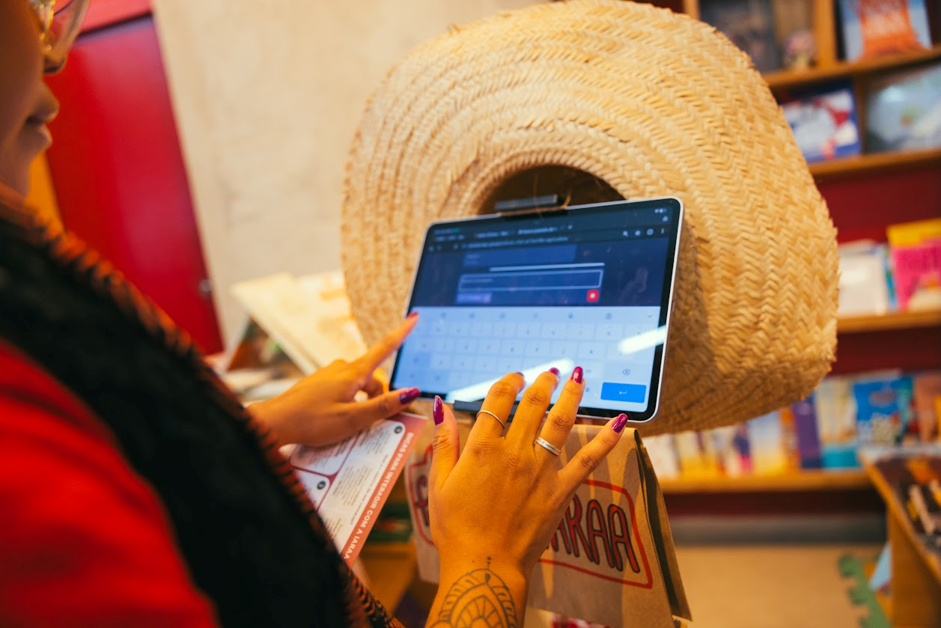
Credit: World March of Women Brazil
7. How can the IARAA be integrated with the public policy on Technical Assistance and Rural Extension (ATER) aimed at peasants and smallholder farmers in Brazil, ensuring that it acts as a tool to strengthen technical assistance, rather than as a mechanism to replace human technical work in the countryside?
One of the principles of IARAA is that it is a tool to support, not to replace, ATER. The absence or precarious state of public Technical Assistance and Rural Extension (ATER) in most parts of Brazil is a reality we cannot ignore. The expansion of agroecologically-based ATER as a right is a long-standing struggle of the movements, and we believe that no technological tool will replace this work. But IARRA can play a concrete and immediate role: to be a reliable support for agroecological production right now. There are, however, limits that the tool will never be able to cross: the systemic analysis of the agroecosystem; the bond of trust built up over time between the technical advisor and the farming family; and the understanding of the territory gained by those who know it intimately in all its dimensions. IARAA is even programmed to encourage people to seek out the ATER services in their own area and to demand this right.
8. What are the challenges of translating processes of political education and class consciousness into an artificial intelligence tool?
This remains a major challenge, because our collective intelligence as movements does not exist solely in the documents we write. It exists in our interactions and in the political experiences we have with our bodies, not just with our minds. However, the technical expertise we have built up, particularly with comrades who are skilled in developing RAG architectures, has enabled us to go beyond what we initially thought possible in this regard. We have managed to embody several of our political principles in the tool’s architecture, and these are indeed rigorously taken into account in most of the responses. This was only possible because the people who developed the tool had a deep understanding of both the technology and the political project.