Seeds Under Lock and Key: UN Experts Denounce the Privatisation of Peasant Life
Article written by Elena Rusca, originally published in Spanish in the newspaper El Clarín de Chile on 17 September 2026. Available here.
English translation by Defending Peasants’ Rights.
The seed is the first link in every food chain. However, what for millennia was a common good safeguarded by farming communities is today at the centre of a global dispute between human rights, food sovereignty and intellectual property.
A new report presented to the United Nations Human Rights Council argues that the international governance of seeds is increasingly shifting towards commodification, corporate concentration and the criminalisation of ancestral practices such as saving, exchanging or selling farmers’ seeds.
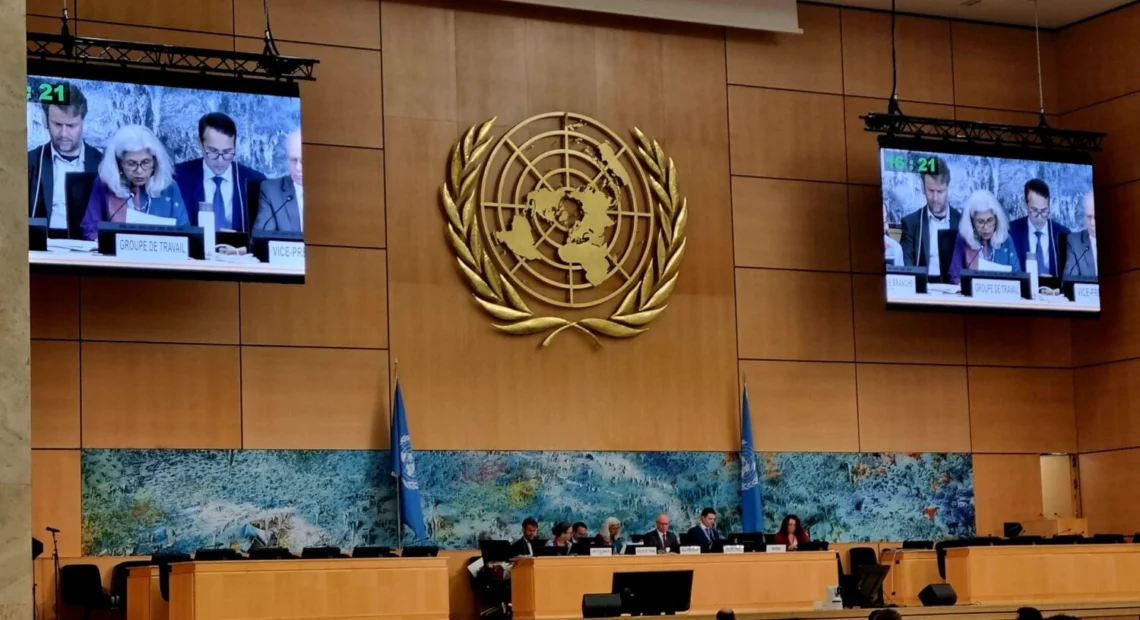
The document, entitled The Right to Seeds: Custodianship, Enclosure and Resistance, was prepared by the Working Group on the rights of peasants and other people working in rural areas. It was presented by Shamlali Guttal, Chair of the Working Group, who also presented the report on the official visit to Ghana carried out from 5 to 14 May 2026.
The diagnosis is unequivocal: seeds are progressively being transformed from biocultural heritage into commodities subject to intellectual property regimes, commercial certification and corporate control.
From common good to private property
The report identifies two opposing models. The first views seeds as common goods that underpin food sovereignty, biodiversity and the collective rights of rural peoples. The second regards them as economic assets subject to patents, plant breeders’ rights and global trade rules.
According to the Working Group, the balance between the two visions has clearly shifted in favour of the latter.
During the presentation of the report, Shamlali Guttal recalled that seeds are not simply commodities for peasants and Indigenous peoples.
“Seeds are the beginning of every meal, the memory of every harvest and the hope of future life. They are a living heritage, developed over generations through selection, exchange and adaptation to different soils, ecosystems and climates”.
Guttal also stressed that Article 19 of the United Nations Declaration on the Rights of Peasants recognises the right of peasants to save, use, control, protect and develop their own seeds. Consequently, States have an obligation to respect, protect and fulfil that right.
International rules on intellectual property, trade agreements and certification systems have imposed growing restrictions on those who save, exchange or sell seeds outside commercial circuits. What for centuries constituted an ordinary farming practice is beginning to be treated as a legal infringement in numerous countries.
The concentration of the global market
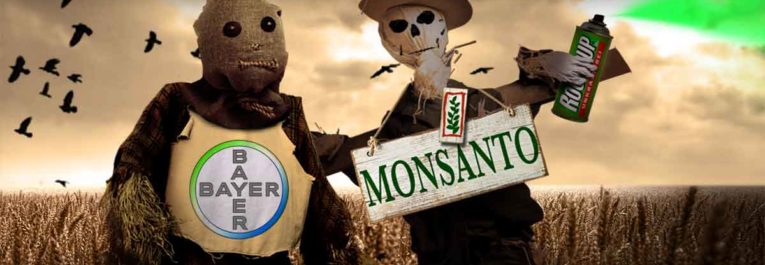
The privatisation of seeds is advancing alongside an unprecedented concentration of the industry. The report states that four companies — Bayer, Corteva, Syngenta and BASF — control more than half of the global commercial seed market.
This concentration does not only affect prices. It also directs genetic research, shapes agricultural policies and favours homogeneous varieties designed for intensive agricultural systems dependent on fertilisers and pesticides.
This erodes agricultural diversity and increases farmers’ dependence on large companies supplying seeds and inputs.
In response to this trend, the report highlights the importance of seed systems managed by farmers themselves. In some regions of Africa and Asia, these systems provide up to 90% of the seeds used for food crops.
During her intervention, Guttal explained that these traditional systems are the main reservoir of agricultural genetic diversity and constitute a fundamental basis for food sovereignty and resilience in the face of climate change.
The International Treaty on Plant Genetic Resources for Food and Agriculture recognises farmers’ rights and establishes a multilateral system for access and benefit-sharing. However, the Working Group warned that these commitments are implemented unevenly and that resources allocated to the benefit-sharing fund remain insufficient.
When saving seeds becomes a crime
One of the most alarming aspects of the report is its description of a growing process of criminalisation of traditional seed-related practices.
In different countries, farmers have faced legal proceedings for exchanging, reusing or selling planting material saved on their farms. The report documents cases in Africa, Asia, Latin America and Europe, with sanctions including heavy fines and even prison sentences.
Plant variety protection regimes, particularly those inspired by the 1991 Act of the UPOV Convention, expand breeders’ exclusive rights over reproductive material. In some countries, restrictions may extend to practices as commonplace as saving seeds from one harvest for use in the next.
The document also warns of the growing use of surveillance technologies, genetic markers, drones and satellite imagery to detect alleged infringements involving protected seeds.
For the Working Group, there is an obvious paradox: while peasant systems continue to provide between 70% and 90% of the seeds used in numerous countries, it is precisely these systems that face the greatest legal restrictions.
Guttal also warned about the expansion of patents on genetic sequences and the use of information obtained from digital databases.
“Genetic sequences can be registered or patented without the physical seed having been used. This practice may allow genetic resources to be used without respecting benefit-sharing obligations”.
The invisible custodians
The report pays particular attention to the role of rural women. It identifies them as the main custodians of genetic diversity and as responsible for the selection, conservation and transmission of knowledge about seeds in much of the world.
However, agricultural policies and regulatory frameworks often render this contribution invisible. The privatisation of seeds and the imposition of certification systems disproportionately affect women, as they restrict practices that are fundamental to their economic and food autonomy.
The erosion of traditional systems does not only entail the loss of biodiversity. It also reduces the scope for action of those who have historically sustained food security at local level.
For this reason, the Working Group calls on States to guarantee equality for rural women in seed governance through secure land tenure, effective representation in decision-making bodies and recognition of their traditional knowledge and their role as the principal custodians of seeds.
Biodiversity under threat
For the UN, the dispute over seeds is inseparable from the global ecological crisis. The accelerating loss of plant genetic diversity is emerging as one of the most concerning signs of contemporary industrial agriculture.
The report states that approximately three quarters of crop genetic diversity was lost during the 20th century, as local varieties, adapted to their territories, were replaced by an increasingly limited number of commercial varieties.
The expansion of genetically modified organisms and new gene-editing technologies also increases the risks of genetic contamination and private appropriation of resources historically developed by farming and Indigenous communities.
The document records cases of contamination of native maize and cotton varieties with unauthorised genetically modified material in Latin America. It also reports lawsuits against farmers who had not knowingly planted patented seeds, but whose fields contained plants originating from such material.
The report also warns of new forms of biopiracy associated with the digitisation of genetic sequences. Thanks to these technologies, companies and institutions can register and patent biological characteristics derived from traditional varieties without physically accessing the original seeds.
This practice weakens benefit-sharing mechanisms and may facilitate the appropriation of knowledge developed by farming and Indigenous communities.
For this reason, Guttal called for new genomic techniques to be subjected to independent risk assessments and traceability and labelling requirements before any deregulation process.
Seeds, territory and conflicts
The defence of seeds cannot be separated from the defence of land. The report stresses that traditional systems depend on living territories where communities can cultivate, exchange and pass on knowledge between generations.
For this reason, forced displacement, land grabs, large-scale agribusiness projects, armed conflicts and environmental degradation constitute direct threats to the right to seeds.
The loss of territories also means the loss of knowledge, locally adapted varieties and community exchange networks that underpin the resilience of food systems.
In this regard, the Working Group recommended that, in situations of armed conflict, occupation or other crises, farmers’ seeds and related infrastructure be recognised as civilian assets essential to the survival of the population.
Peasant resistance and judicial victories
In response to these trends, the document records numerous experiences of resistance. Cooperatives, community seed banks, seed-exchange fairs and participatory plant-breeding programmes continue to sustain an essential part of global agricultural biodiversity.
Guttal stressed that these initiatives should not be treated as marginal activities, but as public goods deserving the same support as formal seed-breeding programmes.
The Working Group also highlights several legal and policy experiences. Among them is the African Model Legislation for the Protection of the Rights of Local Communities, Farmers and Breeders, developed through the ARIPO Arusha Protocol, which offers a human-rights-compatible alternative to the 1991 UPOV model.
Indian legislation expressly protects farmers’ right to save, use, exchange and sell seeds saved on their farms, alongside breeders’ rights.
In Brazil, the Food Acquisition Programme directs public procurement towards traditional and agroecological seeds.
The report also records several judicial victories. In 2021, the Supreme Court of Honduras declared the national plant variety protection law unconstitutional, invoking Article 19 of the United Nations Declaration on the Rights of Peasants.
In Kenya, both the Supreme Court and the High Court have recognised the constitutional protection of customary farming practices involving the exchange of seeds. In November 2025, the High Court held that “sharing seeds is not a crime”, a decision whose significance, according to the Working Group, extends beyond the country’s borders.
These experiences show that another form of seed governance is possible, based on human rights, food sovereignty and the conservation of biodiversity.
A dispute over the future of food
Beyond the agricultural question, the report raises a fundamental political question: who controls the resources that make food production possible?
The Working Group’s conclusion is unequivocal. Seeds cannot be reduced to simple commodities. They constitute the material basis of fundamental rights such as food, health, culture and a healthy environment.
Treating them exclusively as objects of private property not only threatens biodiversity and food sovereignty, but also deepens the economic dependence of millions of farmers around the world.
For this reason, the Working Group urges States to recognise and protect peasant seed systems, strengthen agroecology and guarantee the right of rural communities to save, exchange, develop and sell their own seeds.
In the words of Shamlali Guttal, protecting seeds also means protecting the communities that have cared for them for generations: their rights, their territories, their knowledge and their ability to cope with climate change and other crises.
In other words, returning seeds to their original status: the living heritage of peoples rather than a commodity of the markets.