New Report by the UN Working Group on UNDROP on the Right to Seeds: Defending the Commons, Resisting Corporate Control
What happens when something as fundamental as the seeds we rely on for food becomes a commodity?
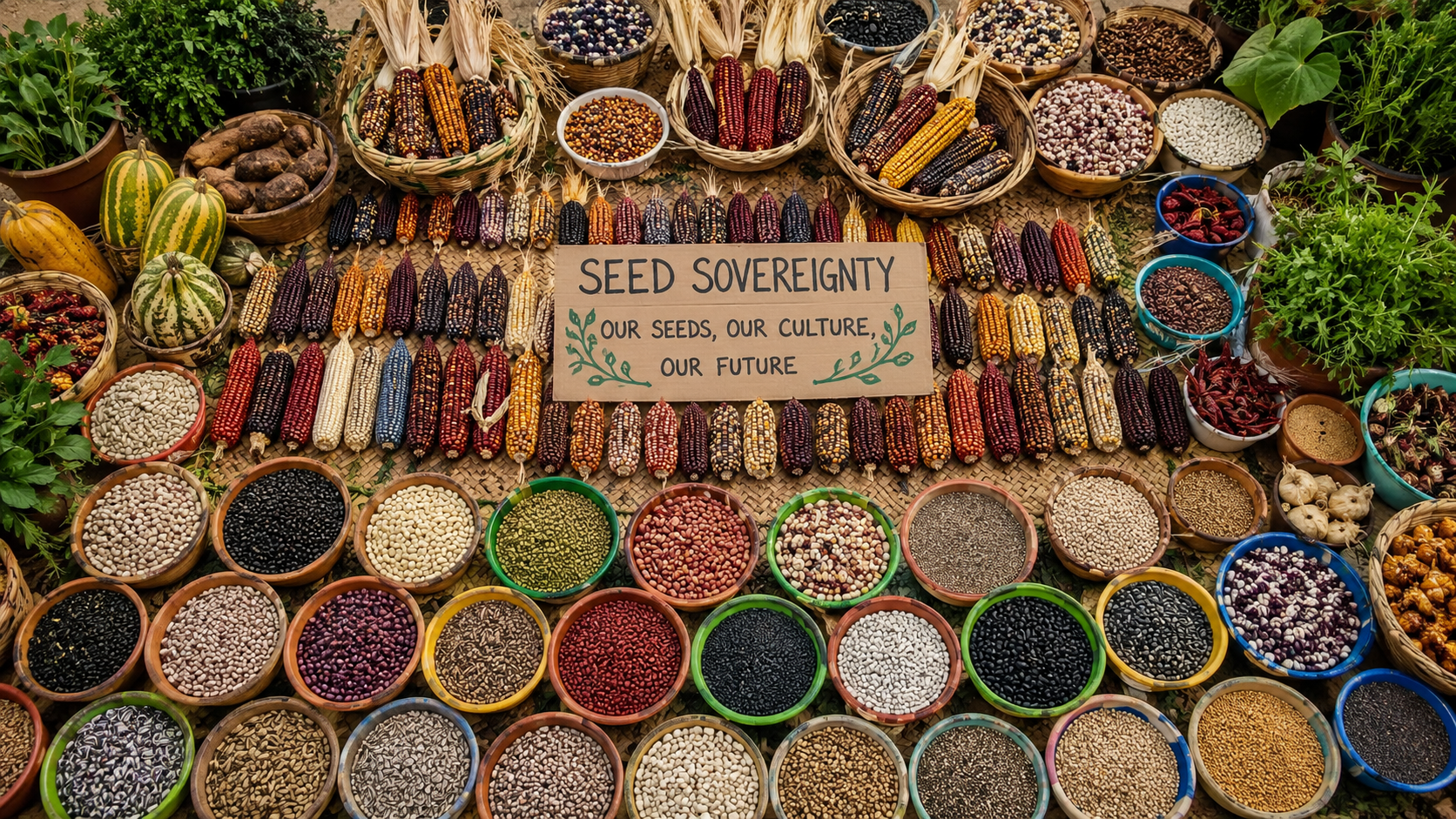
The new report by the UN Working Group on the Rights of Peasants and Other People Working in Rural Areas examines the growing battle over seeds through the lenses of human rights, food sovereignty and biodiversity. At its heart is the right to seeds, the right of peasants to develop, save, use, exchange and sell their own and farm saved seeds. The report exposes how corporate power, intellectual property regimes, seed certification and trade rules are driving the enclosure of seeds, criminalising age old practices and undermining the autonomy of peasant communities. Furthermore, it exposes the growing threats of biopiracy and the erosion of traditional seed systems.
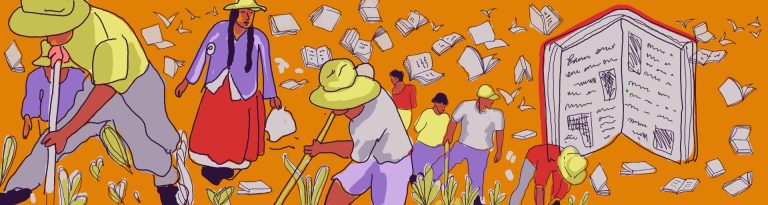
The report also highlights key victories of rural peoples resisting corporate control. In Honduras, peasants helped overturn the so called “Monsanto Law”, while in Kenya a landmark court ruling affirmed that seed sharing is not a crime. In Colombia and Zambia, peasants and their allies have mobilised against restrictive seed laws. Across the world, communities are building seed banks, cooperatives and seed fairs, practising participatory breeding and defending agroecological systems. These struggles are taking place as climate change, genetic erosion, displacement, conflict and new biotechnologies intensify the fight over who controls the foundations of our food systems. For peasant and rural movements, the struggle for seeds is part of a broader struggle for land, water, biodiversity, autonomy and the right of peoples to determine their own food systems.
The Working Group calls for a decisive break with policies that treat seeds as corporate property and commodities. Based on Article 19 of UNDROP, it demands protection for peasants’ rights to save, exchange and sell seeds, as well as public support for community managed seed systems and agroecology, and action to confront restrictive intellectual property regimes and biopiracy. We invite you to read the full report and stand with rural peoples defending seeds as a living commons, resisting corporate commodification and fighting for food sovereignty.