ICARRD+20 must move beyond technocratic fixes to implement real, integral agrarian reform: Global Social Movements in Cartagena
This article was originally published by La Via Campesina on 24 February 2026 (available here).
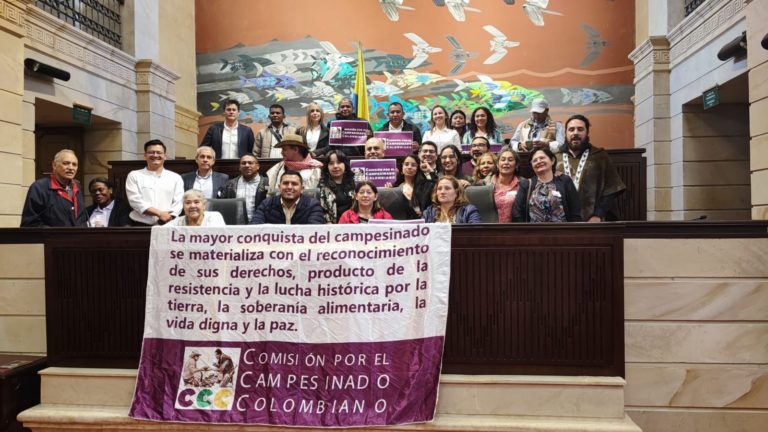
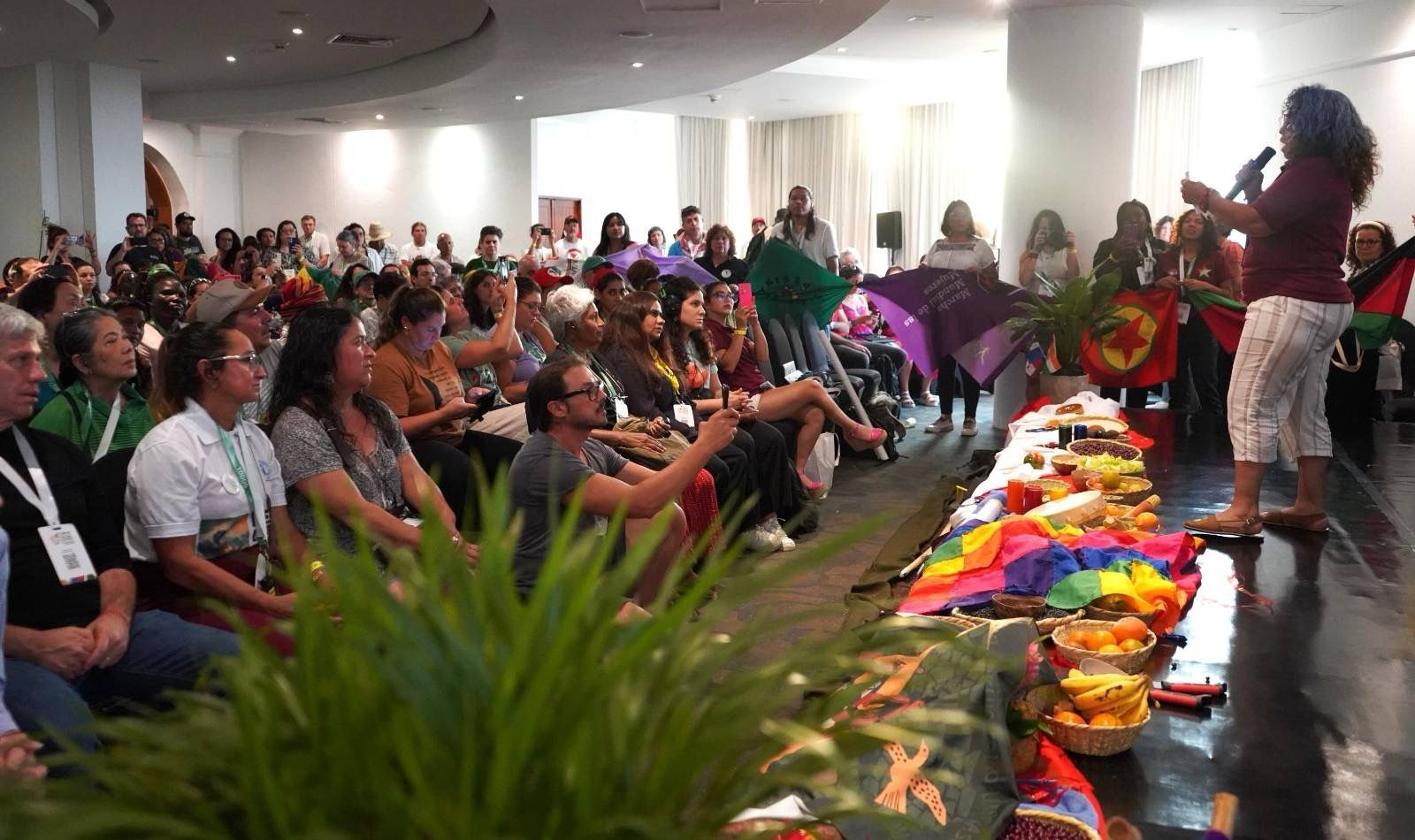
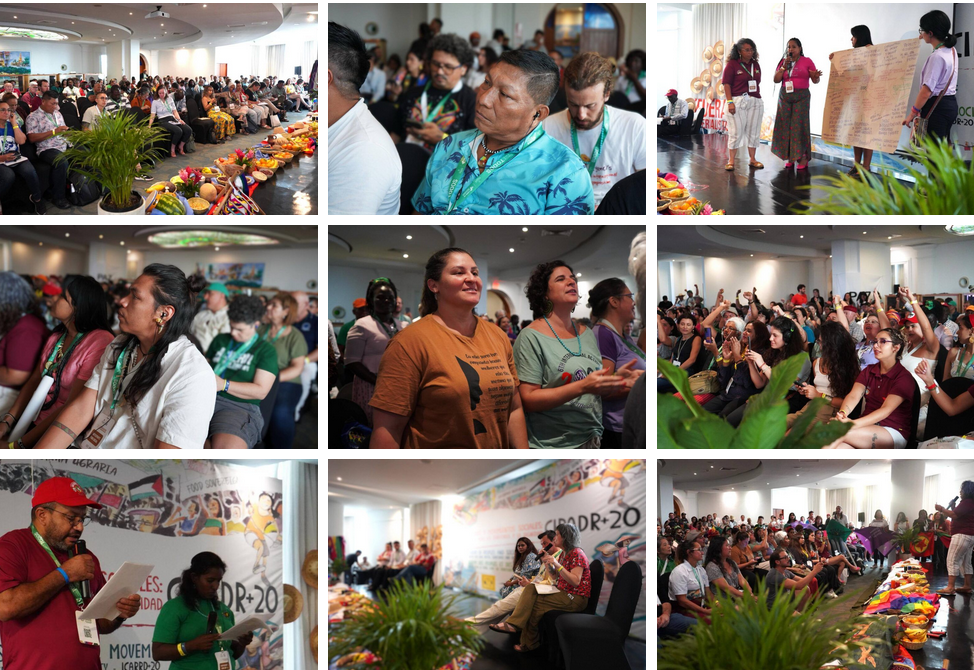
(Cartagena: February 23, 2026) On the eve of a historic intergovernmental conference on agrarian reform and rural development, nearly 300 delegates from worldwide representing peasants, Indigenous Peoples, artisanal fishers, pastoralists, and rural workers – organized through the International Planning Committee for Food Sovereignty (IPC) – have arrived in Cartagena for the ‘Forum of Peoples and Social Movements: United for Land, Water, Territories and Dignity, being held from 22-23 February at Hotel Almirante, Cartagena de Indias.
This autonomous space serves as a critical staging ground for our global social movements to unify our voice before the second International Conference on Agrarian Reform and Rural Development (ICARRD+20) begins on February 24, where all the IPC members will be actively participating in the official plenaries and panels.
Two decades after the first International Conference on Agrarian Reform and Rural Development (ICARRD), the crises surrounding land, water, forests, and oceans are intensifying as resources are increasingly concentrated, commodified, and degraded.
The first ICARRD, held in Porto Alegre, Brazil, in 2006 with the participation of states from all continents, underscored the importance of redistributive agrarian reforms. It was also a milestone in the history of the United Nations as it set in motion a democratic process that allowed for strong and self-organized participation of organizations representing peasants, landless people, Indigenous Peoples, artisanal fishers and fish workers, pastoralists, workers, and other rural communities.
Twenty years later, ICARRD+20 offers a historic opportunity to reaffirm the importance of agrarian reform and rural development, to take stock of transformative examples of agrarian reform, to update the meaning of agrarian reform, and to forge a shared vision for popular, feminist, decolonial, and eco-social transformation. We demand from states and international institutions not another round of voluntary pledges but real commitments and concrete, binding, and measurable actions for structural change.
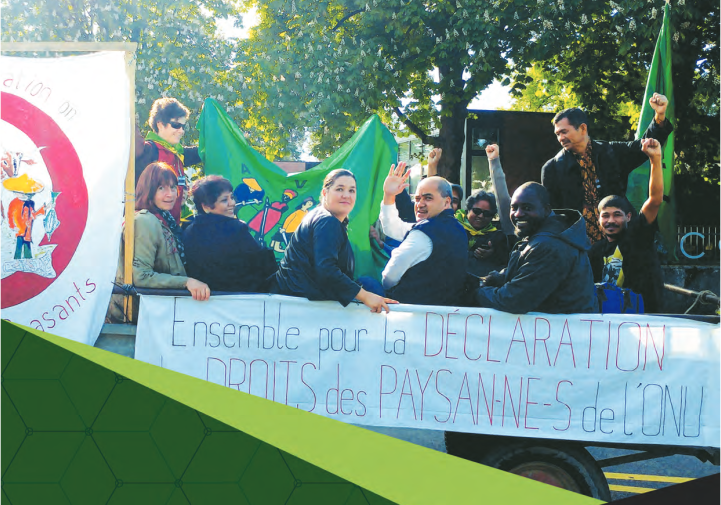
Since 2006, we have successfully campaigned for significant global normative frameworks, including the Tenure Guidelines (2012), the UN Declaration on the Rights of Indigenous Peoples (UNDRIP, 2007), and the UN Declaration on the Rights of Peasants (UNDROP, 2018).
These international human rights instruments affirm that states have the duty to ensure equitable access to and control over land, fisheries, forests, and water as part of the realization of their rights to food, water, housing, work, health, and an adequate standard of living.
Yet, the implementation of policies, programs, and mechanisms that assure the rights of rural peoples and strengthen rural development remains profoundly inadequate.
States, UN institutions, and peoples’ organizations must collectively assess what has and has not been done. Renew political will to apply these existing instruments and confront the systemic barriers that block their realization. Translate the obligations and commitments of states, as well as human rights principles, into redistributive public policies that place territories under the control of those who feed, protect, and care for the world.
At the center of our movements’ demands is a holistic understanding of territories.
Unlike the narrow, technocratic view of land as a “factor of production,” the IPC views territories as living spaces that embody the spiritual, cultural, and material basis of a people’s sovereignty. To defend territory is to defend the cycles of care and renewal that sustain the planet.
Our collective vision for an “Integral and Feminist Agrarian Reform” is rooted in the 4Rs framework:
- Recognition: Respecting and protecting collective and customary tenure systems, particularly for Indigenous Peoples and marginalized communities.
- Redistribution: Ensuring the equitable transfer of land, power, and wealth to landless peasants, women, and youth, while placing caps on corporate land ownership.
- Restitution and Reparation: Restoring control to those dispossessed by colonization, conflict, and forced evictions, including the settlement of historical debts to Indigenous nations.
- Regulation: Implementing strict public interest regulations to limit the influence of market forces and financial speculation on natural resources.
In this regard, our core demands and proposals toward ICARRD+20 are the following:
- Acknowledge Root Causes: States must conduct an honest assessment of the structural drivers of the current crisis, including the failures of market-based reforms and the impact of militarization and occupation.
- Commit to Structural Transformation: Reject the commodification of nature and move toward public policies that shift power from corporations to people – with special attention towards women, youth and gender-diverse and sexually-diverse peoples.
- National Policy Implementation: Develop comprehensive, gender-sensitive agrarian reform plans that prioritize the rights of women, youth, and landless workers – especially from historically oppressed castes and groups.
- Corporate Accountability and Financial Justice: End corporate resource grabs and “definancialize” land and water, removing them from the logic of speculative markets.
- Strong Monitoring Mechanisms: Strengthen the role of the CFS in monitoring the implementation of the Tenure Guidelines and the outcomes and commitments of ICARRD+20. Outcomes of ICARRD+20 should be reported to all relevant UN institutions, including the UN Human Rights System, the Rio Conventions (CBD, UNFCCC and UNCCD), UNCTAD, IFAD, UNDP etc. Establish international, national and regional observatories to monitor progress and reform the FAO’s Global Land Observatory into a participatory platform for community-led data.
Our position paper captures these demands in its full nuance and detail. (English, Spanish, French)
The struggle for agrarian reform today is inseparable from the struggle against ecological collapse and imperialist expansion. In Cartagena, the world’s social movements are standing firm:
Peoples’ control over land, water, and territories, NOW! Popular Agrarian Reform, Now!
Below is the Forum’s Declaration