UNDROP as a Shield for Fisher Peoples
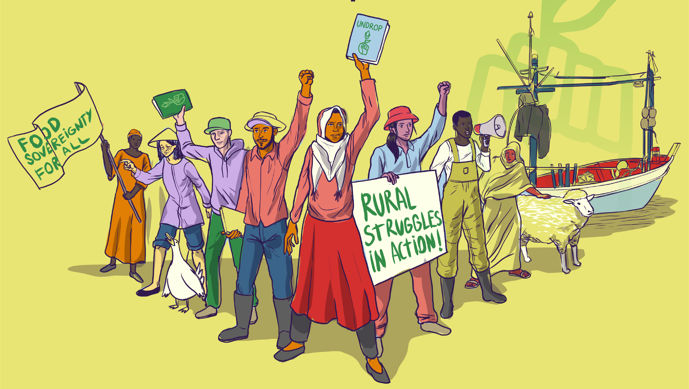
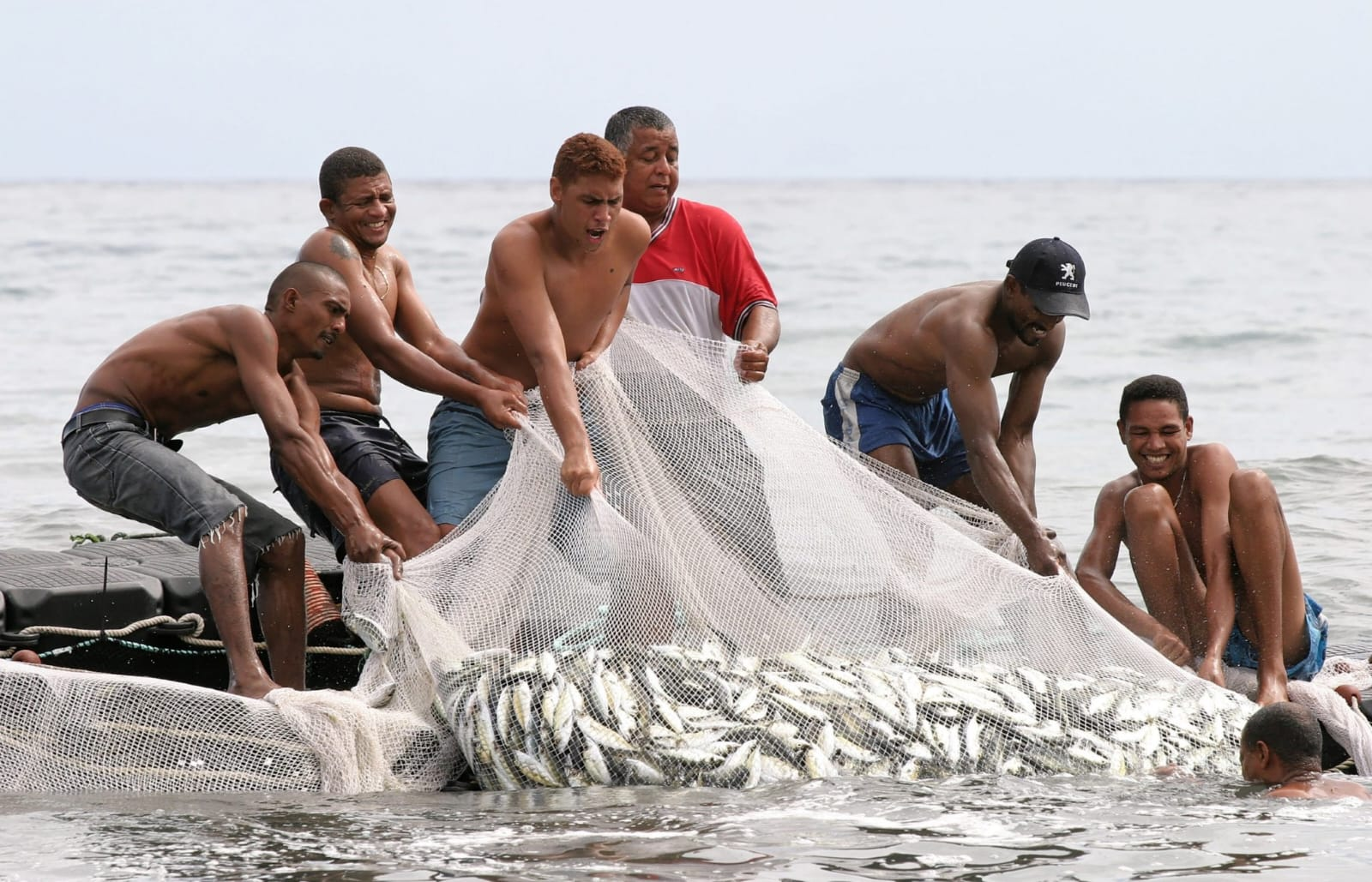
Cover image credit: Christel Grimaud
The adoption of the United Nations Declaration on the Rights of Peasants and Other People Working in Rural Areas (UNDROP) in 2018 marked a historic milestone for rural justice. However, to date, its development and implementation have largely focused on the peasantry. It is essential to remember that the rights enshrined in UNDROP are fully applicable to other peoples who live and work in rural and aquatic territories, including fisher peoples. Article 1, paragraph 2 of UNDROP is very clear in this regard: “This Declaration applies to any person engaged in artisanal or small-scale agriculture, crop planting, livestock raising, pastoralism, fishing, forestry, hunting or gathering, as well as handicrafts related to agriculture or other related occupations in a rural area.”
In this sense, it is fundamental to continue advocating for the expansion of UNDROP’s reach to the various constituencies covered by its definition, including fisher peoples, by strengthening their appropriation of the Declaration and promoting their visibility as full rights-holders.
“And first was the water…
Still the earth did not peek through the waves,
still the earth was only a soft and trembling mud…
There were no flower moons nor clusters of islands…
In the womb of the young water, continents were being gestated…”
Dulce María Loynaz, fragment of Creation (Author ‘s translation).
Interpreting the UNDROP from the perspective of aquatic territories
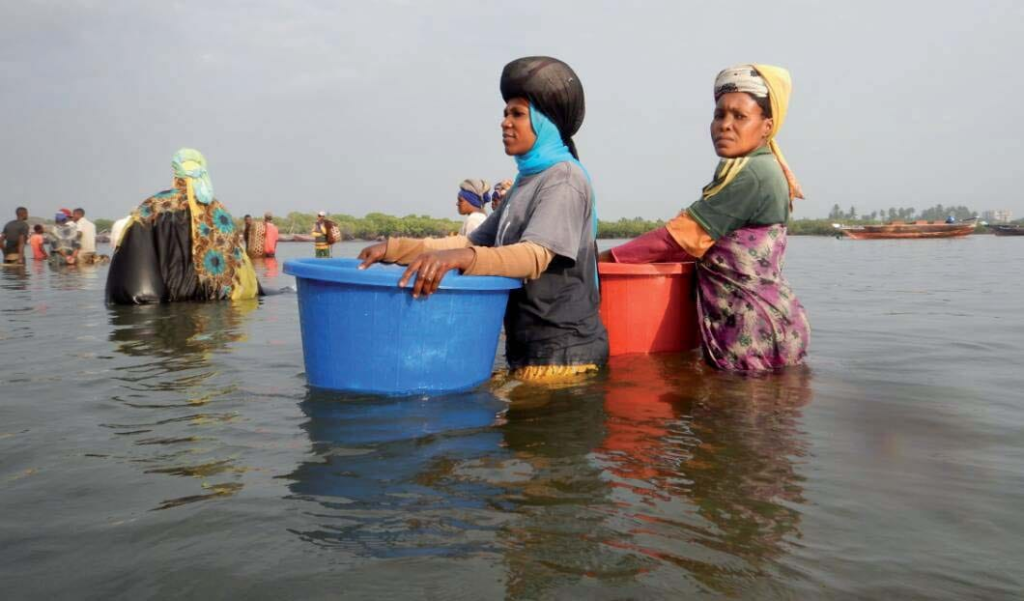
Photo credit: January Ndagala
For decades, the struggle for territorial rights has been imagined almost exclusively in terms of land. Nevertheless, when discussing territories in the context of Small-Scale Fisheries (SSF), it is imperative to highlight the absolute interdependence between water and land for the livelihoods, food sovereignty, and cultural identity of these communities. The coast and inland water bodies represent a complete living environment where daily life, livelihoods, and culture intersect; where the land ends, the territory continues into the water.
In this spirit, a fundamental contribution that artisanal fisheries can provide to the interpretation of UNDROP is the use of paradigmatic concepts emerging from the social sciences and social movements in Latin America and the Caribbean, such as Maritorio (Maritory) or Territory of Life. This recognizes coastal and marine areas of collective use as spaces of food sovereignty shaped by the people who traditionally inhabit them; places understood as spiritual and intercultural spaces of “affection with nature and ancestry,” rather than merely extraction zones.
In turn, this vision expands toward the concept of Acuatorio (Aquatory), a term that allows for the understanding of the “amphibious territorialities” of the communities that inhabit these spaces. This perspective recognizes that the protection of artisanal fisheries requires an approach that treats all aquatic ecosystems—rivers, lagoons, wetlands—equally, as indivisible territories of land and water.
Consequently, the right to land and other natural resources enshrined in Article 17 of the UNDROP must be interpreted as a framework that encompasses the complex relationships that fishing communities maintain with their aquatic environments, reaffirming that water and land constitute inseparable dimensions of this right.
The Threats: “Ocean Grabbing” and the Blue Economy
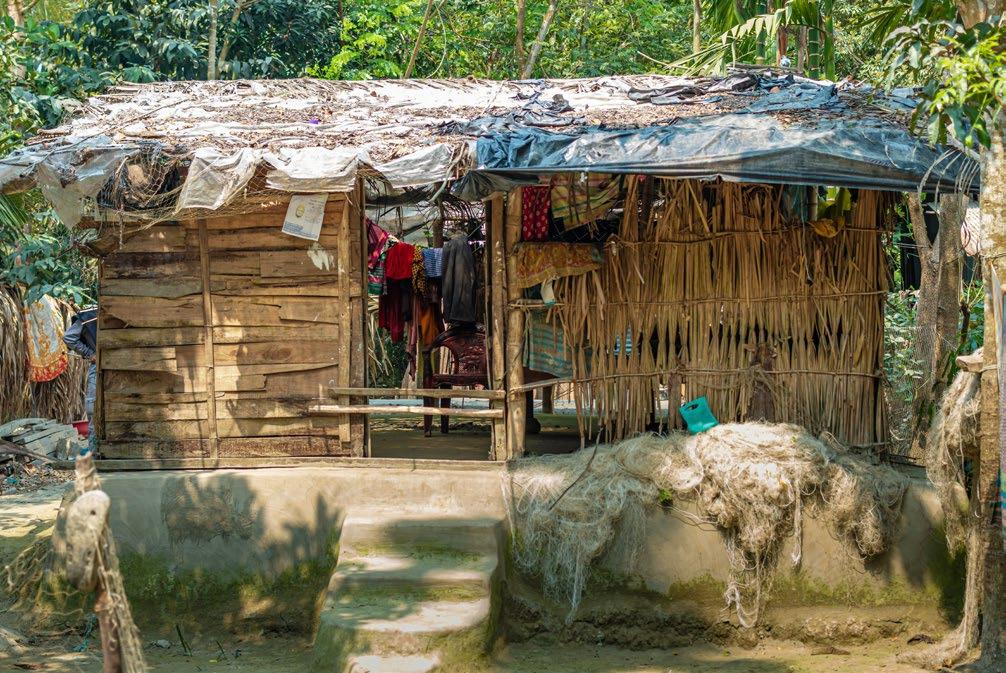
Photo credit: Druvo Dash
Today, fisheries territories face an unprecedented onslaught of threats to their lives and livelihoods. Under the guise of development and sustainability, luxury tourism projects, offshore energy, industrial aquaculture and fisheries, and deep-sea mining exploration are destroying marine ecosystems and grabbing fishing grounds and landing sites. This is known as Ocean Grabbing or Blue Grabbing.
Some approaches to environmental conservation, when applied under the “Fortress” model – meaning protected areas that are closed off and exclude traditional inhabitants – have also become a threat. UNDROP, in dialogue with the Voluntary Guidelines for Securing Sustainable Small-Scale Fisheries (SSF Guidelines), must be used to reclaim the important role of fisher peoples—who have inhabited these territories for centuries—as the true guardians of biodiversity and ecosystems. As established by these Guidelines, conservation must not be carried out at the expense of communities, but in collaboration with them. Therefore, the protection of their tenure rights and the recognition of their traditional practices and knowledge is—in itself—a conservation strategy.
The Defensive Triad: UNDROP, SSF Guidelines, and Tenure
The strength of UNDROP for fisher peoples lies in its capacity to dialogue with other international instruments. For protection to be effective, the Declaration must be read in light of the SSF Guidelines and the Voluntary Guidelines on the Responsible Governance of Tenure (VGGT).
While the SSF Guidelines and the VGGT provide the technical roadmap for responsible governance, UNDROP elevates these recommendations to the status of Human Rights. Together, they form a legal framework that enables fisher peoples to demand and struggle for the redistribution of land/water, preferential access to fishing zones and resources, and the collective management of their aquatic territories—both coastal and inland—as well as protection against all arbitrary and illegal displacement or eviction. Furthermore, this framework sustains the guarantee of Free, Prior, and Informed Consent (FPIC) and the implementation of territorial impact assessments regarding large-scale “Blue Economy” projects.
UNDROP also represents a pioneering instrument by recognizing the right to water as an essential pillar for a dignified life for small-scale fisher peoples, and as the foundation of their livelihoods. This right is understood not only for human consumption but also for food production and, by extension, for fishing. Likewise, by recognizing community management systems, this right reinforces the autonomy of fishing communities in the governance of their territories, where traditional knowledge plays a key role. Finally, the Declaration also establishes provisions for States to protect communities against third parties, which is crucial in the face of extractive or polluting activities that threaten both access to aquatic territories and the integrity of ecosystems.
Women at the Heart of Fisheries
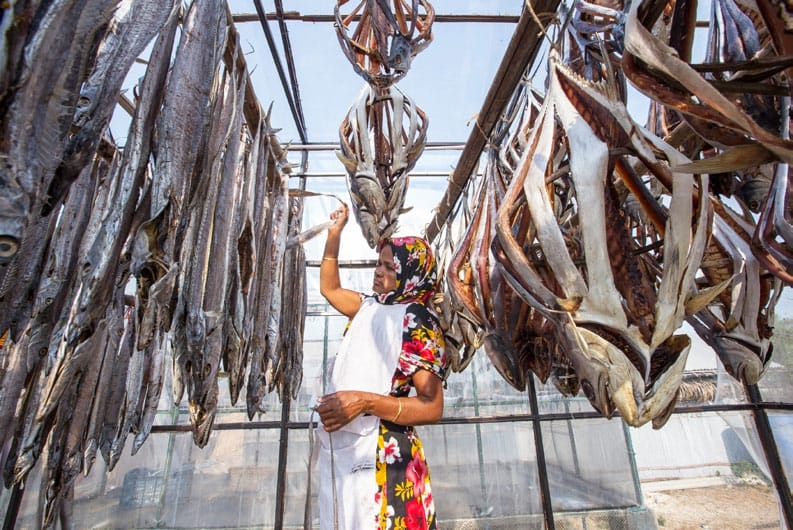
Photo Credit: Din M. Shibly
If the UNDROP is to be used as a shield for the peoples of the sea, its protection must be particularly robust for women, who sustain the life and the economic fabric of their communities, yet face systemic and legal invisibility. In artisanal fisheries, as in other rural sectors, the relationship with territory is deeply marked by a gender dimension: while men are usually out on the water, women’s productive and vital space is the shoreline and the coastal strip. It is there that they process, dry, and market the fish; consequently, they are disproportionately affected by land and ocean grabbing and the advance of the “Blue Economy.”
This differentiated impact has been explicitly recognized by the UN Committee on the Elimination of Discrimination against Women (CEDAW) in its General Recommendation No. 34, noting that rural women—including fisherwomen—are not a homogeneous group and suffer from intersecting forms of discrimination. This intersectional perspective has been reinforced by the Inter-American Court of Human Rights (OC-27/21), which establishes that women who depend on natural resources face “aggravated vulnerability” when their environment is destroyed, as it breaks not only their source of income but also their fabric of care and community life.
Therefore, under a logic of comprehensive protection, the UNDROP cannot be interpreted in isolation, but must be understood in permanent dialogue with CEDAW and the SSF Guidelines – particularly Chapter 8. This normative articulation constitutes the basis for demanding that States fully recognize women’s work in fisheries, respect their knowledge regarding the sustainable use of resources, and guarantee tenure security for land adjacent to the water. This, in turn, is essential for fisherwomen to stop being invisible and to act as stakeholders, responsible decision-makers, and beneficiaries.
In this sense, Article 4 of UNDROP establishes provisions for States to adopt measures to eliminate discrimination against fisherwomen and guarantee their full and effective participation in all decision-making processes. It also recognizes their right to access productive resources, services, and social protection on an equal footing, addressing the structural inequalities they face. Thus, Article 4 not only complements CEDAW standards but also consolidates a transformative approach that demands public policies with a gender perspective in artisanal fisheries.
From Recognition to Realization: UNDROP as a Living Instrument for Small-Scale Fisheries
Although the term “peasant” shapes much of UNDROP’s language, its scope is unequivocal: small-scale fishers and fishworkers are full rights-holders under this instrument. As the International Collective in Support of Fishworkers (ICSF) recently argued before the UN Working Group on UNDROP, the challenge is no longer one of recognition, but of realization. It is time to definitively break down the “invisible frontier” that has historically excluded water territories from agrarian debates and ensure that fishing communities take ownership of the Declaration as their own shield.
From this perspective, making UNDROP meaningful in the lives of the fisher peoples requires moving beyond a purely declaratory reading of rights. The Declaration must be mobilized in tandem with the SSF Guidelines and the VGGT, not only as complementary instruments but as part of a coherent architecture for rights-based fisheries governance. In this framework, human rights cease to be abstract guarantees and become tools for action, rooted in the lived experiences, knowledge systems, and collective organization of the communities.
Ultimately, transforming UNDROP into an operational tool is both a political and a collective process. It depends on strengthening the capacities of small-scale fisheries organizations, their active participation in decision-making spaces, and the reinforcement of the strategic alliances that sustain their struggles. Historical experience demonstrates that durable change emerges from this interplay between community-based resistance and a sustained technical and political presence in global governance arenas.
UNDROP can serve as a vital compass, but only if it is actively steered by the very communities it seeks to protect. The task ahead is to ensure that the fisher peoples not only see themselves reflected in this Declaration, but use it as a tool to protect the futures of their territories, their livelihoods, and their rights.
Candelaria Aráoz Falcón – International Collective in Support for Fishworkers (ICSF)